



Koffel for State Representative Independent · District 7
until Election Day, November 3

Where I Stand

Seven things I'll work on. No party told me to pick them.

01

The Homeowner Stability Act

Your property tax bill has grown faster than your paycheck.

The problem

In December 2025 the legislature passed five property tax bills and called it historic relief. Read the fine print.

Most of what they did was cap how fast your bill can grow in the future. The one piece of direct relief — a larger owner-occupancy credit — doesn't reach you until January 2027, phases in over four years, and pays out the same flat amount whether you're a two-income household in your peak earning years or a widow on Social Security in the house she's owned since 1994.

That isn't nothing. It just isn't aimed at the problem.

Here's the actual mechanic, because most people running for this seat won't tell you. Ohio law is supposed to keep rising valuations from raising your bill, and on voted levies it mostly works. It does not work on inside millage. It does not work in school districts sitting at the 20-mill floor, which is most of them. So every reappraisal and every triennial update, a piece of the increase comes straight through to you, and nobody ever votes on it.

Franklin County residential values rose an average of 41% in the 2023 reappraisal — 17% in Grandview Heights, higher in parts of Columbus — with another increase in the 2026 update. Run that three cycles in a row and a fixed income does not keep up.

A house bought in 1994 for $120,000 doesn't put more money in your pocket because the county now says it's worth $600,000. You can't eat equity. You still have to write the check.

What I'll do

  • Cap what you owe against what you earn. Property tax on an owner-occupied primary residence gets capped at a set percentage of household income. Anything above that line comes off the bill as a credit — not a lien, not a deferral, not a bill your kids inherit.
  • Make the state pay for it, not your neighbors and not your school. The state reimburses every district, township, and fire levy dollar for dollar, the same way Ohio already reimburses local governments for the homestead exemption. A circuit breaker that quietly shifts the cost onto the levy next door isn't relief.
  • Fund it by sunsetting the data center sales tax exemption. That exemption cost the state $554.9 million in 2024 and nearly $1.57 billion in 2025 — more than eleven times what the Department of Taxation forecast. Local governments lost another $166.8 million in 2024 on top of that. In May 2026 the governor paused new approvals while lawmakers take a look. Pausing isn't ending. The same buildout driving your electric bill up should be paying down your tax bill.
  • Protect long-term owners specifically — the people being taxed out of homes they've owned for thirty years, who did nothing but stay.
  • Oppose total abolition. The amendment fell short of the signatures for this November and its backers are already collecting for 2027. My answer won't change: property taxes generate roughly $24 billion a year in Ohio, about 65% of all local tax revenue, and they pay for the fire truck. Blowing that up with no replacement isn't relief, it's a different emergency.

02

Fund Our Schools, End the Levy Treadmill

Every dollar the state doesn't send comes back as a levy on your house.

The problem

Ohio adopted the Fair School Funding Plan in 2021, after twenty-five years of litigation — four Ohio Supreme Court decisions in DeRolph — holding that the way this state paid for schools was unconstitutional. The plan finally answered a question Ohio had never bothered to answer: what does it actually cost to educate a child here? It was phased in over six years, on an explicit promise that the cost figures would be updated along the way, reaching full funding in FY 2027.

Now watch how that promise got kept.

The FY26–27 budget did run the phase-in percentage to 100%. On paper, the plan is fully implemented. But the base cost inputs — teacher salaries, benefits, building operations, every figure the formula uses to price a school — were frozen at fiscal year 2022 levels. Meanwhile the other half of the formula, property values and household incomes, updates automatically every single year.

Freeze one side of the equation and update the other and you get a number that means nothing. Districts look wealthier than they are. The state's share drops. In Upper Arlington and Grandview Heights, that arithmetic pushes us toward the 10% minimum state share — not because anybody here got richer, but because the state stopped counting what a school costs.

Here is what it added up to. Measured against FY 2025, the budget increased state K–12 funding by $281.9 million. A fully updated formula would have delivered $3.04 billion. That is a shortfall of more than $2.75 billion over the biennium.

That money does not disappear. It comes back as a levy on your ballot and a line item on your tax bill. Property taxes and school funding are the same conversation, and anybody who talks about one without the other is selling you half an argument.

What I'll do

  • Update the cost inputs, annually, in statute. Full funding of a formula priced in 2022 is not full funding. This should not be a fight every two years.
  • Fix the local share calculation so that no district gets declared wealthy by an accounting artifact and dropped to the minimum state share.
  • Publish the shortfall before every levy vote. Before a district comes to you for money, the state should have to say in writing exactly how far below its own formula it funded that district. If Columbus is going to shift the bill onto your house, it can sign its name to it.
  • End the side channels. The “performance supplement” was created outside the funding formula and accounts for 38.3% of that $281.9 million increase — roughly $53.9 million a year. Upper Arlington is exactly the kind of district that collects on it. I would end it anyway. Money routed around the formula isn't tied to what students cost, and once that door is open, some future legislature decides who counts as performing.
  • Call state underfunding what it is: an unlegislated property tax increase.

03

Your Electric Bill Is Not a Rounding Error

Ohio built the data centers. You're paying for the power lines.

The problem

Ohio has nearly 200 data centers and about half of them sit in central Ohio. PUCO says Columbus-area residential electric bills this month are more than 7% higher than they were in August of last year. The summer before that, AEP Ohio says the average customer's bill rose about $27 a month, driven by generation costs.

None of that is really in dispute. Demand went up faster than supply, Ohio law doesn't let AEP build its own generation to meet it, so the price of power rises and lands on your bill.

The state's response has been to subsidize the demand. Ohio hands data centers a 100% sales tax exemption on equipment and construction materials. That exemption cost the state $554.9 million in 2024 and nearly $1.57 billion in 2025 — more than eleven times what the Department of Taxation forecast — plus another $166.8 million in lost local sales tax in 2024 alone. When the legislature voted to end it in the last budget, the governor vetoed the line. This spring he paused new approvals, which is not the same thing as ending it.

Then in June, the legislature tried again. House Bill 646 was a serious package: a separate electric rate class for data centers, water monitoring and discharge rules, a provision clarifying that nondisclosure agreements can't override Ohio's public records law, and a cut in the sales tax break from 100% to 50%. Members of both parties agreed on the ratepayer protections. The bill died anyway, late on a Wednesday night, over the tax break. It sits in Senate Energy Committee until November.

Meanwhile, the one thing actually working came from a utility and a regulator — not from the legislature. AEP Ohio proposed a data center tariff in 2024, and PUCO approved it in July 2025 over the objections of Google, Amazon, Microsoft, and Meta. New data centers above 25 megawatts must pay for at least 85% of the capacity they reserve, for twelve years, with an exit fee if they walk. This month PUCO went further and required 180 days' notice before a data center connects to the grid.

Here's my problem with that. Good policy that happens to apply in one utility's service territory isn't policy. It's an accident of geography. If you live in AEP's footprint you're covered. Cross a line on a map and you're not.

What I'll do

  • Codify the 85% take-or-pay standard statewide. This is already written. House Bill 706 — Reps. Tristan Rader, a Democrat, and David Thomas, a Republican — takes the AEP framework and applies it to every utility in Ohio. It should have passed in June.
  • End the sales tax exemption on data center equipment and construction materials. Not halve it to 50%. End it, and put the money toward the property tax relief in Plank 1.
  • Make the deals public. Every Ohio Tax Credit Authority incentive agreement should be published before it's approved, with enforceable clawbacks and job and wage numbers that anyone can check.
  • Itemize it on your bill. Utilities should separately break out data-center-driven transmission and generation costs, so you can see what you're paying for instead of taking anyone's word for it.
  • Settle the argument with data. Industry says these rules chase investment away. Maybe. So measure it: annual public reporting on load, jobs, revenue, and rate impact. If the critics are right, the numbers will say so and we adjust. I'd rather be corrected by evidence than by a lobbyist.

04

Permission to Build

Rules should be aimed at concentrated power, not at the person trying to start something.

The problem

Here's the whole thing in one sentence: the State of Ohio gave billion-dollar data centers a sales tax exemption and a place near the front of the grid queue, while somebody trying to open a restaurant on Fifth Avenue spends months waiting on permits and a builder trying to put four townhomes on a vacant lot gives up.

Same statehouse. Opposite treatment.

The cost lands on families. Ohio's typical home value has risen sharply since 2020, and the state's median home price is now 2.6 times median household income — the widest gap since 2005, according to the Ohio Housing Finance Agency. The National Association of Realtors puts the median age of a first-time buyer at 40, an all-time high, up from 38 the year before and the late twenties in the 1980s.

The middle rungs of the ladder are the ones that got removed. Only 3% of Ohio's homes are duplexes — what one Ohio State planning professor calls America's original workforce housing. And Columbus now has 25 affordable rental units available per 100 extremely low-income households, a worse ratio than San Francisco at 31 or New York City at 34.

This is why your daughter can't buy in the neighborhood she grew up in, and why your parents can't find anything in Grandview to downsize into.

What I'll do

  • Permit shot clock. Firm state deadlines for building permit and plan review decisions. Miss the deadline, the permit is approved. Government's delay shouldn't be your carrying cost.
  • Third-party plan review as a by-right option when a jurisdiction is backed up.
  • A statewide pre-approved plan library so a small builder doesn't pay again for engineering that's already been done a thousand times.
  • Fee transparency. Every jurisdiction publishes its full schedule of development and impact fees in one place, in plain numbers.
  • One front door for small business: a single state portal for formation, licensing, and permits, plus broader occupational license reciprocity so a licensed tradesperson moving to Ohio can go to work here.
  • Compete for the federal money. The 21st Century ROAD to Housing Act funds pre-approved plan libraries, infill conversion, and permitting streamlining through competitive grants. Ohio should be organized to win those grants instead of watching other states take them.
  • Move House Bill 361. Permitting and inspection reform, backed by Ohio Realtors and the Ohio Chamber of Commerce. Six hearings in House Local Government, the most recent in June, and it still hasn't moved. Lame duck is the last chance this General Assembly gets.

What I will not do

I will not support the state overriding Upper Arlington's or Grandview's zoning from Columbus. Local communities decide what gets built.

My job is to make sure that once a community says yes, the process doesn't take two years and tens of thousands in soft costs to get to a shovel.

05

The Ohio License Plate Privacy and Accountability Act

Cameras that track every car in Ohio should have rules. Right now they have almost none.

The problem

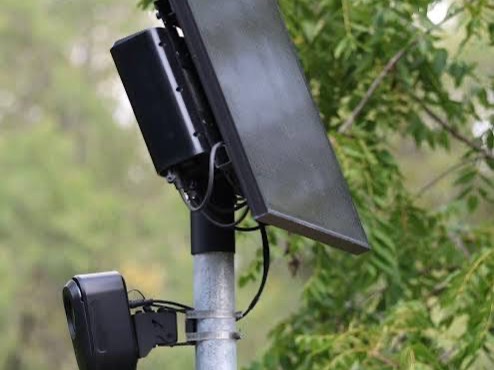
Automated license plate readers are everywhere in Ohio — cities, townships, hospitals, school districts, universities, even homeowners associations. Volunteers with the DeFlock project have mapped more than 6,400 of them across the state, sixth-most in the country. Upper Arlington police alone run twenty. And it isn't just police: Ohio's workers' compensation bureau, the state fire marshal, the prison system, and the attorney general's office have all signed contracts with Flock Safety.

A camera on Lane Avenue isn't a camera on Lane Avenue. Flock advertises a network of more than 120,000 readers across 49 states capturing over 20 billion vehicle reads a month. When a plate gets logged here, it goes into something much larger than your police department.

Here is what that means in practice. When Signal Cleveland obtained Cleveland's audit logs, the heaviest users of Cleveland's camera data were not Cleveland police. They were the Houston Police Department, the Dallas Police Department, and the California Highway Patrol — each searching tens of thousands of times, far more than Cleveland's own officers.

Closer to home, a July 2026 audit of Columbus's system flagged more than 15,000 searches as possibly immigration-related out of roughly 19.6 million total. Almost none came from Columbus police. They came in through the shared network, from agencies Columbus never approved. The city disabled nationwide sharing in June and statewide sharing in July, after the fact.

Ohio has no state statute governing any of this. No retention limit. No audit requirement. No warrant standard. No penalty for misuse. Every rule that exists is either a city ordinance or a policy the vendor wrote for itself.

And the vendor can change its mind. Last week Flock announced it will now recommend seven-day retention instead of thirty, add tools to limit agency-to-agency sharing, require case codes on searches, and flag abnormal activity. Good. Some of that is what I've been asking for. It's also proof of the point: those are corporate policies, announced by press release, revocable by press release. Your Fourth Amendment rights should not be a setting in somebody's software that a company can toggle when the news cycle turns.

I work in criminal defense. I've seen what happens when a tool gets deployed faster than the law governing it — and I've also seen these systems help find a missing kid. This isn't about taking the cameras down. It's about writing the rules down.

What I'll do

  • Warrant requirement for querying historical ALPR data, with an emergency exception for imminent danger and missing persons.
  • A hard retention limit in statute — not in a vendor's terms of service, and not in a recommendation.
  • Every search tied to a case number, logged, and auditable.
  • No out-of-state or federal sharing of Ohio data without a warrant, and no access for purposes unrelated to investigating an Ohio crime. Houston should not be able to search where your car was parked.
  • Public transparency portal and mandatory reporting. Cleveland's ordinance in July is a workable model: it cut off Fusion Center access, raised penalties for outside use, and required an online portal plus quarterly reports to council.
  • Real penalties for misuse, including suppression of unlawfully obtained data.

06

A Healthcare Floor

Nobody in Ohio should be one diagnosis away from losing everything.

The problem

Last year's budget wrote a tripwire into Ohio law. If the federal government drops its share of Medicaid expansion funding below 90%, coverage for the expansion group terminates — and the statute contains no mechanism to bring it back even if the federal share is later restored. There are 769,869 Ohioans in that group, including roughly 362,000 in rural counties. Nobody campaigned on this. It sits in the Revised Code, waiting on a decision made in Washington.

And it may not take a Medicaid cut to pull it. Section 44111 of the federal reconciliation act reduces the expansion match for states covering certain non-citizens. A trigger that fires on any drop below 90% doesn't care why the number moved.

Above that line, the problem got measurably worse this year. The enhanced premium tax credits expired on January 1. Ohio marketplace premiums rose between 13% and 17%, the average deductible climbed by about $1,000 per person, and Ohio's marketplace enrollment fell 20% — the second-steepest drop of any state in the country. Roughly 583,000 Ohioans buy coverage this way.

Those people didn't get healthier. They got priced out. Somebody who works full time, doesn't qualify for Medicaid, and now faces a deductible they'll never meet is functionally uninsured. They skip the appointment, the problem gets worse, and it lands in an emergency room the rest of us pay for anyway. That isn't compassion policy. It's arithmetic.

Ohio can't fix federal tax credits. Ohio can decide whether to stand under people when they fall.

What I'll do

  • Repeal the automatic termination trigger. Coverage for 770,000 people shouldn't switch off without a vote of the General Assembly. If the federal share drops, the legislature should have to look at the number, debate it, and decide — on the record, with their names attached.
  • Establish a state reinsurance program under a federal 1332 waiver. Roughly twenty states have done this, most of them for reinsurance. Colorado reported about a 20% average premium reduction statewide in its first two years; Alaska saw 38% in year one. This is the tool that works, it doesn't create a new entitlement, and it matters more now than it did a year ago — reinsurance does the most good precisely when the subsidy cliff is back, which as of January it is.
  • Pass House Bill 384. Reps. Munira Abdullahi, a Democrat from Columbus, and Thomas Hall, a Republican from Madison Township, have been carrying a $35 insulin cap across multiple sessions with two dozen cosponsors. It would make Ohio the 26th state to do this. It has gone nowhere. Roughly a million Ohioans use insulin.
  • Require real price transparency from hospitals and insurers, with penalties that exceed the cost of noncompliance.
  • Protect pre-existing condition coverage in Ohio law regardless of what happens federally.

07

Narcan in Every School

A dose costs less than a textbook. There's no argument left.

The problem

Ohio's overdose numbers have come down hard, and that is real progress worth saying out loud. The state recorded 2,931 unintentional overdose deaths in 2024 — a 34% decline in a single year, against a national decline of about 27% that was itself the largest one-year drop the CDC has ever recorded. Fentanyl-related deaths fell 42%.

But the supply is more lethal per dose than it has ever been. Fentanyl, and now nitazenes, turn up in pills teenagers believe are Percocet or Adderall. A kid who takes one pill at a party isn't making a decision about addiction. He's making a decision about a pill, and the pill is not what he thinks it is.

Naloxone reverses an opioid overdose in minutes, cannot realistically be misused, and works the same whether the person on the floor is a student, a teacher, a parent at a game, or a contractor working in the building.

Ohio law lets schools stock it. Most districts have no requirement to, no funding line for it, and no trained staff. Permission is not a policy.

What I'll do

  • Require naloxone in every Ohio public school building, stocked and maintained the way an AED or an EpiPen already is.
  • Supply it through the Department of Health's existing distribution network rather than out of a district general fund that's already short. Project DAWN runs more than 500 naloxone distribution sites reaching about 83 of Ohio's 88 counties. The pipeline exists. Use it.
  • Fund the staff training, which is the actual recurring cost and the actual reason districts hesitate.
  • Put the nitazene test strip exemption into the Revised Code. Fentanyl strips are already protected by statute. Strips for nitazenes, xylazine, and the rest are legal only because the governor suspended normal rulemaking so the Board of Pharmacy could adopt an emergency rule. A tool that keeps people alive should not depend on an executive order staying in fashion.
  • Expand treatment capacity, because reversing an overdose without a next step just resets the clock.

Get involved

Agree with some of this?

An independent has no party list to fall back on. If you want any of the above to make it to a committee hearing, it starts with a name on a list.